Is AI taking over software engineering's future in the dark?
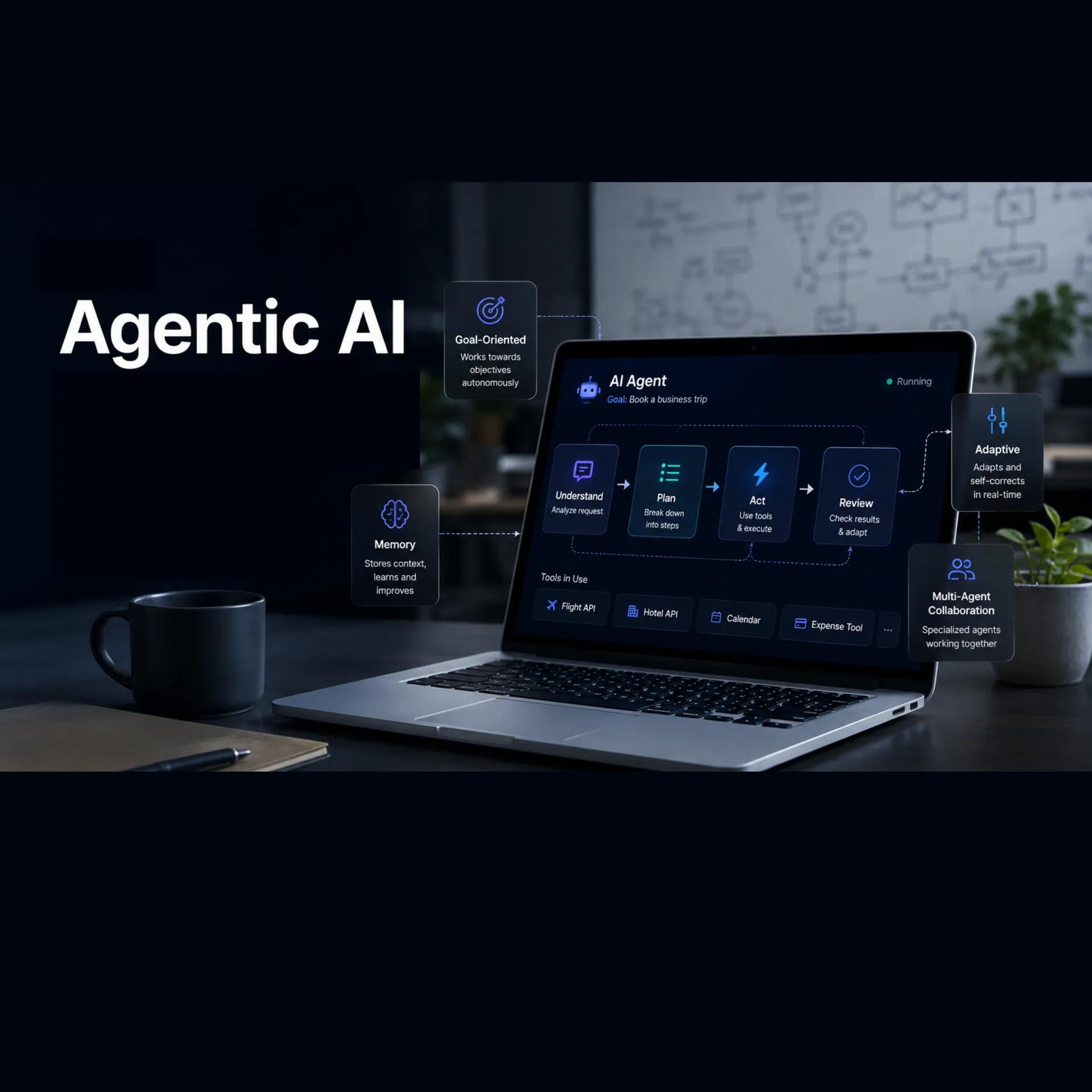
Industries are being transformed by artificial intelligence (AI), and the software engineering field is also being brought to a new height with AI. The AI-centric coding assistants, automated testing tools, and Machine learning (ML) algorithms have offered really quick software development.
But now the main question is: Can AI take the place of software engineers, or will it be their most powerful tool?
How is AI revolutionizing software development?
AI-Powered Code Generation & Debugging:
AI has empowered GitHub Copilot, ChatGPT for coding, and Tabnine to produce, suggest, and even fix bugs in the code, all automatically. These AI-based assistants enable developers to produce faster and cleaner code than previously imaginable.
Automated Software Testing:
Software testing is an extremely time-consuming part of the development cycle. The AI technology of today and the near future enables code debugging and quality assurance to be carried out without human involvement, but also to be done effectively and safely with much more efficiency. AI-simulated testing tools like Testim, Applitools, and Functionize can operate automated tests, isolate bugs, and ensure software quality by using a reduced number of human resources.
AI in Software Architecture & Design:
Artificial intelligence can spot patterns in huge amounts of data and, based on links, suggest the most suitable projects. Using predictive analytics in the process of developing software helps teams to come up with designs that are both scalable and efficient and can also be modified in the future depending on the requirements.
AI and DevOps Automation:
Recurrent neural networks have proven to be the best of their abilities in making the computer do well in competitive gaming as well as in controlling motors. Hence, AI gives the machines of production a deeper mind. Continuous integration, continuous deployment, and AI (CI/CD + AI) together are now performing better than ever. Additionally, systems like Harness AI and Azure DevOps AI not only simplify the application of changes but also supervise the performance of the systems and, in the case of any problem, can execute the automated reversal of the updates.
One of the burning questions is, will AI make software engineers replaceable?
The concise answer is NO, at least not in the immediate future. Even if AI helps with coding chores and debugging, a human being's potential for creativity, problem-solving, and decision-making is irreplaceable. This means that rather than replacing them, AI complements their skills, enabling them to develop software more efficiently and creatively. As robots are only good at doing mechanical and repetitive operations in a speedy manner.
How Software Engineers Can Get Ready for a Future With AI
One of the first things that software engineers should do in the time of AI is:
- Get the hang of AI & machine learning- knowledge of AI algorithms and models are sure way for software engineers to get an advantage.
- Concentrate their efforts on problem-solving & creativity- AI might produce code, but still, human intuition is motivating for being an innovator.
- Optimize AI-Powered development tools- Being familiar with the use of AI tools will be a major part of the work and will be necessary for every coder.
- Follow the latest AI developments- As the technology changes so fast, it is important to continuously grow their field of knowledge by learning and developing new skills in AI.
Conclusion: AI is a partner, not a replacement.
The smart collaboration of software engineering with AI is the main idea that should be focused on, not replacement. AI is here only to help the workforce carry out everyday tasks faster, but the role of software engineers in creating, maintaining, and managing the production of these systems is still as important as ever.
According to the statement of Gonca Akgun C. Erkan, "The scary AI is not artificial intelligence, but rather the natural stupidity of human beings who are afraid to make use of AI”. It is high time that AI gets to actualize its potential in harmony with humanity. In this way, AI can be considered an extension of human capabilities rather than a threat to humanity's evolution of AI.