Launch YourMVP Smarter
We build AI-powered MVPs in 8–12 weeks for startups and enterprises exploring new markets. Our lean approach delivers cost-effective, production-ready solutions that validate ideas quickly, attract early users, and secure funding.
Executive Summary
`MoonDive's MVP Development Services deliver lean, end-to-end product builds to validate business ideas quickly. Using a proven methodology, the team focuses on rapid prototyping, user validation, and investor readiness to reduce time-to-market and development costs. Typical engagements produce investor-ready MVPs in 8–12 weeks and report a 90% success rate. The service supports modern web and mobile stacks, AI integration, and iterative testing to de-risk launches. To discuss your idea, schedule a consultation: https://moondive.co/schedule-meeting.
TLDR
- Reduce time-to-market by 60%.
- Lower development costs by 40%.
- Achieve a 90% success rate using our methodology.
- Launch an investor-ready MVP in 8–12 weeks.
- Validate market demand within 30 days post-launch.
Why Choose MVP Development?
Minimize risk, maximize learning, and get to market faster with our proven MVP approach
MVP Development
We build custom AI-powered MVPs for startups and enterprises, helping you explore new markets, validate ideas, and attract early investors. Our expert team delivers cost-effective, production-ready solutions that combine the power of artificial intelligence with practical, real-world functionality. Whether it’s scalable SaaS MVPs, custom CRM solutions, or enterprise-grade applications. With our AI-driven MVP approach, you can launch faster, gather actionable user feedback, and refine your product based on real market needs. we ensure your MVP is future-ready, scalable, and investor-friendly, giving your startup or enterprise the confidence to grow, attract funding, and make data-driven decisions from day one.
Rapid Prototyping
Market Validation
Core Focus
Data Insights
Our MVP Process
Our structured MVP process combines research, strategy, design, and launch to deliver a scalable product that’s investor-ready and customer-focused.
Discovery & Strategy
We begin by understanding your idea, goals, and target market. Our team conducts deep market research and competitor analysis to identify opportunities and risks.
Design & Prototyping
Once the strategy is defined, our team creates intuitive user journeys and interactive prototypes that visualize how your MVP will look before development.
MVP Development
We begin building your MVP using agile sprints. Our developers focus on writing clean, scalable code while integrating key features prioritized during the discovery phase.
Launch & Iterate
We deploy your MVP, track user interactions, and use analytics and feedback to quickly refine, identify areas of improvement, and rapidly iterate to make your product stronger.
Technology Stack
Our MVPs are powered by a robust technology stack, carefully chosen to ensure scalability, high performance, and seamless user experiences.
Frontend
Backend
Database
Cloud
Mobile
Success Stories
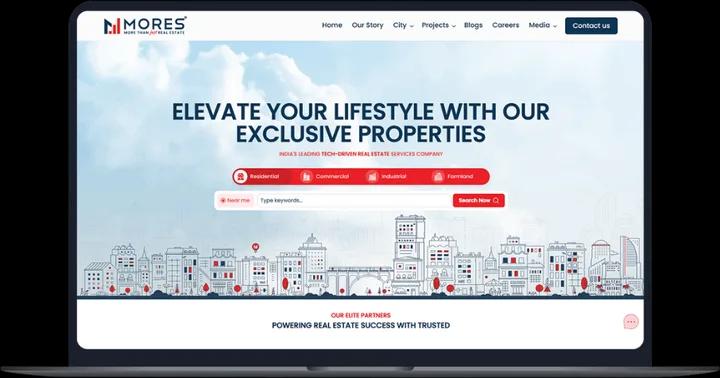
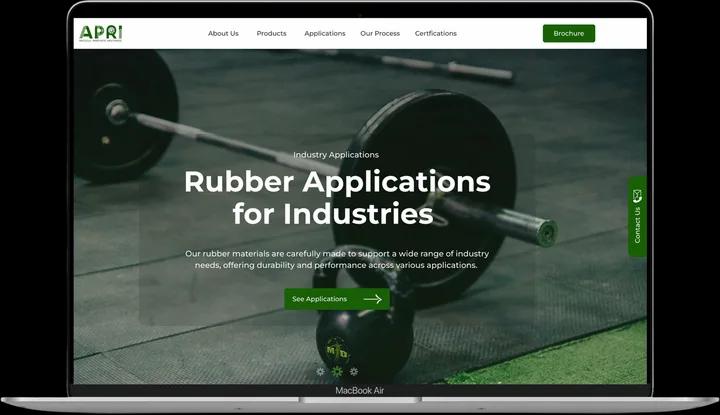
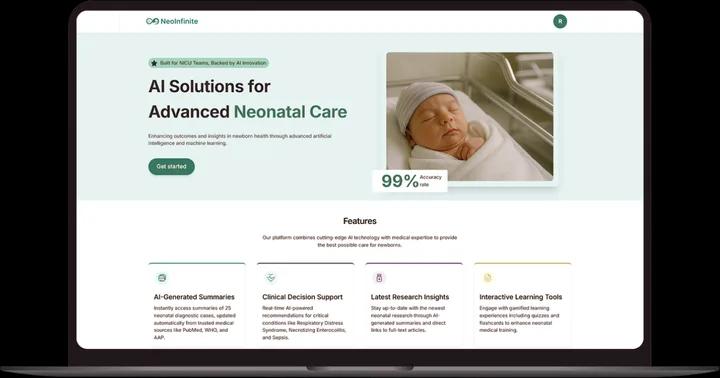
Explore how our AI MVPs solutions have helped businesses scale, innovate, and lead their industries.
Frequently Asked Questions
Everything you need to know about MVP development - from timeline to technology choices
What is an MVP and why do startups need it?
An MVP (Minimum Viable Product) is a version of your product with just enough features to validate your core business idea with real users. Startups need MVPs because they take 8-12 weeks instead of 6-12 months to build and let you test market demand before investing heavily in a full product. At MoonDive, we've helped 15+ startups validate ideas through MVPs, with 73% going on to raise funding based on MVP traction.
What's the difference between MVP, Prototype, and Proof of Concept?
An MVP (Minimum Viable Product) is the first working version of your product with all core features, backend, and database. It’s ready for users and can be launched on app stores. Then a Prototype is a clickable design that shows how the product will look and flow. It has no backend or real functionality and typically takes 3–6 weeks to create. And last one a Proof of Concept (POC) check if your idea is technically possible. It’s not user-facing and usually takes 2–4 weeks to build.
How long does it take to build an MVP?
Building an MVP (Minimum Viable Product) usually takes 8–12 weeks from start to launch. The process includes planning, design, development, testing, and deployment, all done in 2-week sprints for transparent progress. A Rush MVP can be completed in 6 weeks by focusing on core features, while complex MVPs with AI or real-time functions may take 14–16 weeks depending on project scope and requirements.
Should I build my MVP with no-code tools or custom development?
Use no-code tools like Bubble or Webflow for simple MVPs that need quick setup in 3–4 weeks. Choose custom development if you need scalability, unique features, complex logic, or full code of ownership. About 90% of funded startups prefer custom MVPs for stronger technical foundations. At MoonDive, we build custom MVPs that scale from 100 to 1M users without rebuilding.
What features should I include in my MVP?
It totally depends on your idea, target audience, and industry. However, your MVP should focus only on features that prove your core value proposition. For example, Uber’s MVP included just a rider app, driver app, GPS tracking, and payment, nothing extra. A good framework is: 1) User registration/login 2) One core feature that solves the main problem 3) Basic payment (if needed) 4) A minimal admin panel. Avoid adding extras like multiple user roles, social features, or advanced analytics. At MoonDive, we help clients reduce unnecessary features by up to 60%, ensuring faster launches and focused results.
Can I raise funding with an MVP?
Absolutely! You can definitely raise funding with an MVP. In fact, 67% of seed-stage startups secure funding with MVPs, not full products. Investors mainly look for product–market fit, user engagement, early revenue or monetization potential, and your ability to iterate fast. The focus is on traction, not perfection. At MoonDive, our clients have raised $23M+ using the MVPs we built, including one startup that secured $2M in seed funding with just 500 users and 40% weekly retention.
What tech stack should I use for my MVP?
The ideal tech stack depends on your MVP’s goals, but for most projects, we recommend: Frontend: React or Next.js for speed and SEO; Mobile: React Native for a single iOS and Android codebase; Backend: Node.js or Python/FastAPI for quick, scalable development; Database: PostgreSQL for reliability and complex data handling; and Hosting: Vercel or AWS for cost-effective auto-scaling. This stack helps us build MVPs 30% faster and ensures easy future hiring thanks to a global talent pool. We switch stacks only for specific needs, like real-time video (WebRTC) or AI/ML features (Python).
Should my MVP work on web, iOS, and Android?
The key is to launch your MVP on the platform most used by your early adopters. Start where you can validate your product fastest. • For B2B products, the web is usually best since most users access tools on desktops. • For consumer apps, mobile phones is preferred because users engage through their phones. Example: Instagram launched iOS only and waited 2 years to release Android, while Uber began iOS-only in San Francisco. Both focused on early adopters first, which allowed them to refine the product before scaling.
How do I validate my MVP idea before development?
To validate your MVP idea before development, focus on testing demand and user interest first: • Talk to potential users: Speak with 20–30 people. If 10+ would pay for your solution, it’s promising. • Create a landing page: Describe your product and collect sign-ups; 100+ early sign-ups indicate strong interest. • Manual service test: Deliver your solution to 5 users without tech. If they love it, you can automate later. • Check competitors: Existing competitors prove demand; aim to be 10x better at one key feature. At MoonDive, we offer a free 1-hour validation workshop to pressure-test ideas using a framework that has helped 15+ MVPs succeed.
What happens after MVP launch - do I rebuild or iterate?
After your MVP launches, the focus should be on iteration, not rebuilding: • First 30 days: Collect user feedback and track key metrics like sign-ups, activation, and retention. • Months 2–3: Address top complaints and requests. • Months 4–6: Add features that improve retention or monetization. You should only consider a full rebuild if the tech stack can’t scale; user feedback shows the product is fundamentally wrong, or you’re pivoting to a completely different market. At MoonDive, we build MVPs with scalable architecture, and 85% of our clients continue iterating on the same codebase for 2+ years, avoiding unnecessary rebuilds.
Can you build my MVP if I'm non-technical?
Yes! 70% of our clients are non-technical founders. We handle everything from translating your vision into technical requirements, recommending the right tech stack, building the product, and deploying it to app stores or web hosting. You stay involved by defining features, giving feedback on designs, testing the product, and making business decisions. We use tools like Figma for designs, so you can see progress in real-time without needing to understand code.
What if my MVP fails - is the investment wasted?
An MVP “failure” is not wasting investment; it shows what not to build before committing to a full product. True waste is spending months developing something users don’t want. When MVPs don’t succeed, founders often: 1. Pivot using the same tech 2. Find a better target market 3. Adjust the business model 4. Save the idea for later Example: One B2C MVP didn’t resonate with consumers, but pivoting to B2B in 4 weeks led to $50K MRR. At MoonDive, your MVP code is never wasted; it helps you validate or invalidate ideas quickly.
Do you sign NDAs for MVP projects?
Yes, we sign NDAs before discussing your idea. While execution matters more than the idea, Instagram, Uber, and Airbnb weren’t first in their markets; we take confidentiality seriously. In 5+ years, we’ve never had a client’s idea leaked or copied. All our agreements include IP assignment clauses, so you own 100% of the code and design we create.
Ready to build your MVP?
Let's transform your innovative idea into a market-ready MVP that users love